
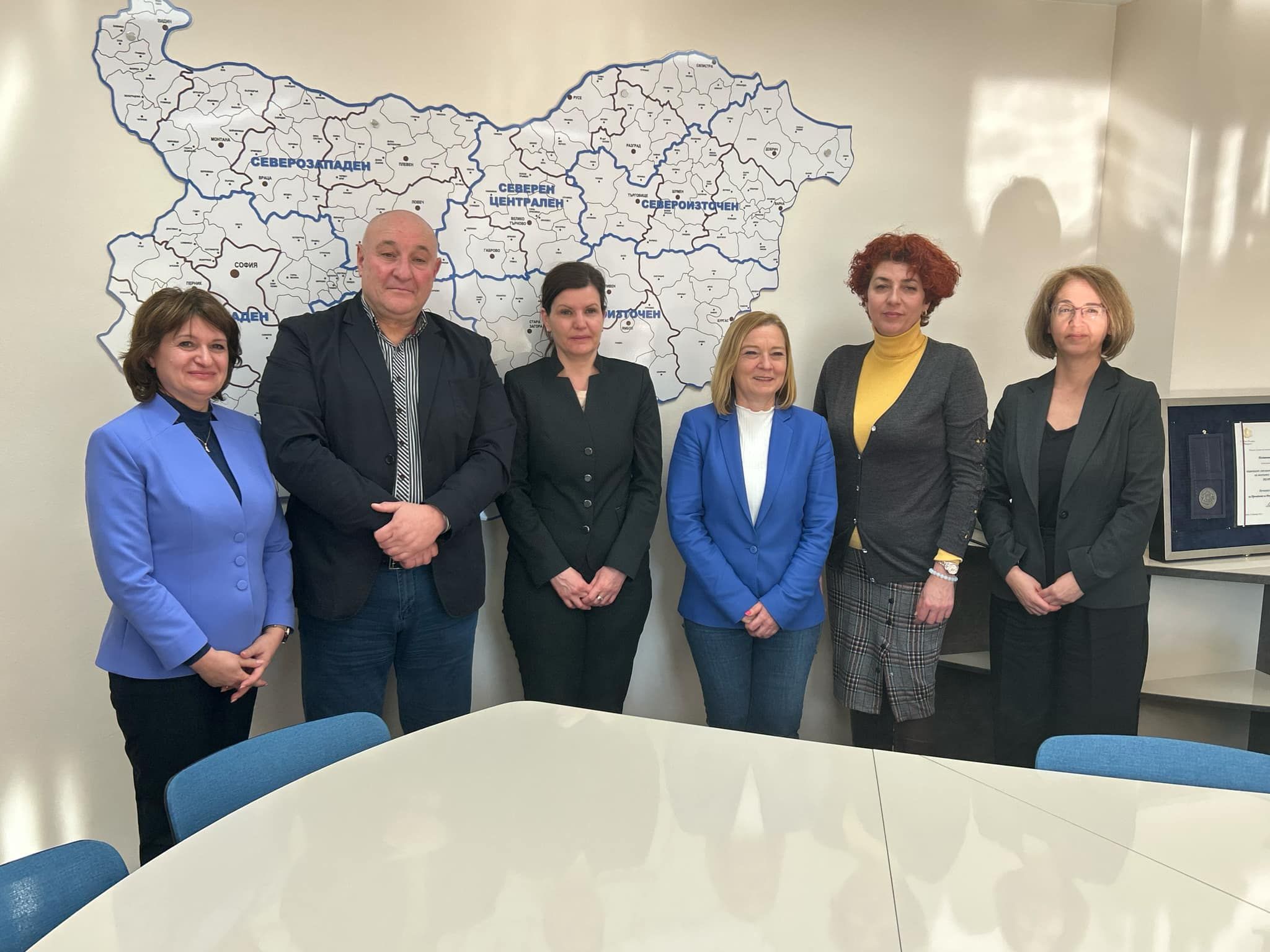
NAMRB and BSLAF with joint efforts to improve health services at local level
Specific opportunities for interaction between the National Association of Municipalities in the Republic of Bulgaria (NAMRB), the local authorities and the Bulgarian Union of Medical Assistants and Paramedics (BSLAF), in order to improve health services and strengthen the health system at local level, were discussed at a working meeting between the managements of the two representative organizations on 11 February 2025.
On behalf of the NAMRB, the Executive Director of the Association Silvia Georgieva, Deputy Executive Director Teodora Dacheva, Daniela Ushatova - team leader and Marusya Tsvetkova - expert at the NAMRB took part in the discussion.
Feldshers and medical assistants are often the main health professionals in small settlements, providing primary care and care. Recognising UCLAF as a professional organisation is a prerequisite for better communication – it will provide opportunities for better cooperation between municipalities and our specialists and the improvement of health services at local level. This was stated during the meeting by Alexander Alexandrov, Chairman of the Board of BLAF.
Together with their deputy - Galina Zaharieva, they presented the goals in the work of the professional organization, as well as the priority tasks that the management has set itself - promoting the activities of medical assistants and paramedics, increasing interest in studying the profession, as well as the legal establishment of regulations to support future medical professionals.
Municipalities play a key role in providing health services locally, especially in remote and rural areas where access to doctors is limited. Mayors are closest to the people and are often personally involved in providing medical care for the population - pharmacy, pre-hospital and hospital care, health offices, home care, dental care, said NAMRB Executive Director Silvia Georgieva. She added that in theory the state allocates resources for health offices in schools and kindergartens, crèches, multi-profile hospitals and health mediators, but the practice shows that local administrations need to allocate additional funds and engage with the whole range of health care.
The Executive Director gave an example of the different approaches that mayors apply to ensure adequate access to health for the population – periodic preventive examinations, delivery of necessary medicines for the elderly and people in need by mayoral deputies, including the purchase of a mobile medical centre. Despite the efforts of local authorities on the ground, the lack of trained staff remains the biggest problem for the provision of health care.
Representatives of both organizations also commented that the provision of school health care is key. According to the legislation, the municipality must provide a medical officer for every 800 children in the health offices of educational institutions. A change in legislation allowing medical assistants and paramedics to fully perform their professional competences in school health offices and increasing the number of trained staff would solve the challenge of difficult provision of medical staff.
During the conversation, specific lines of interaction between NAMRB and BLAF were also discussed.
 EN
EN  BG
BG